
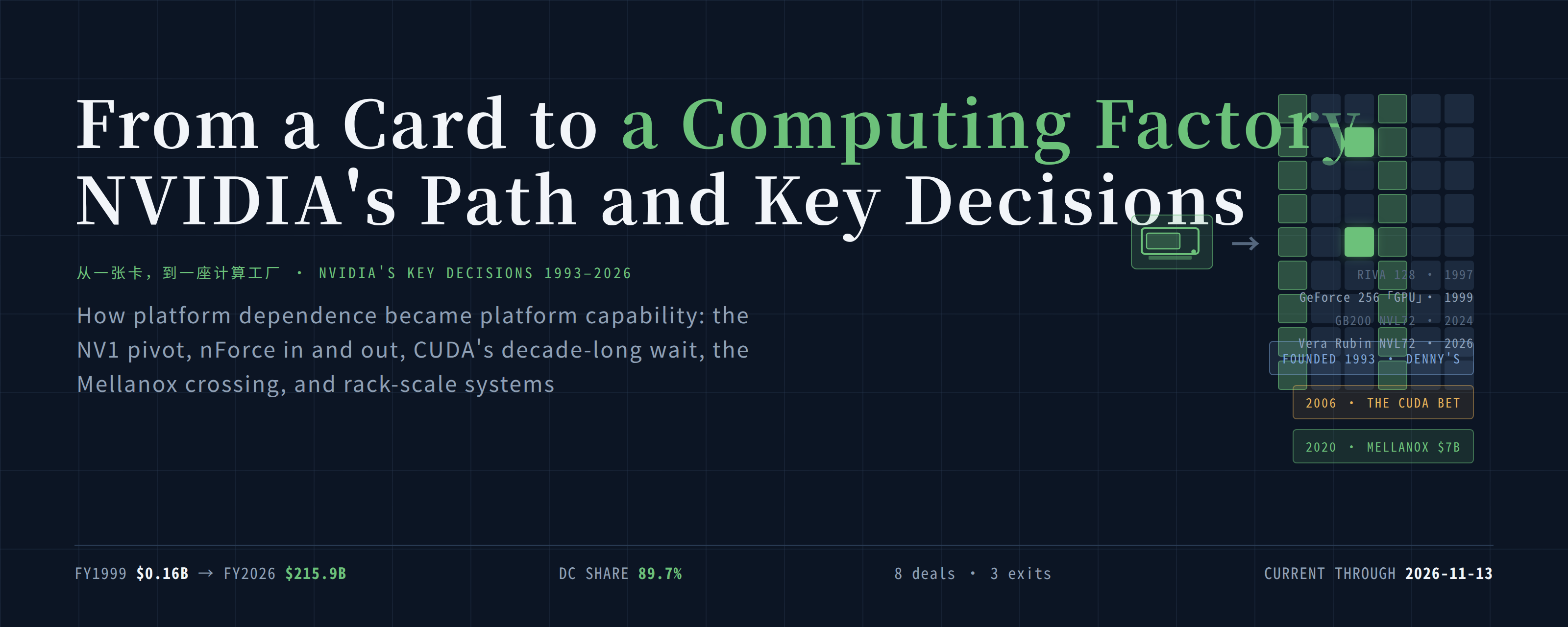
Over thirty-plus years, one company changed direction again and again—abandoning some bets, holding others for a very long time. CUDA waited a decade for deep learning; Mellanox pushed the boundary of computing past the server; the rack became the new unit of product. This retrospective follows the key events to examine NVIDIA's transition path, Jensen Huang's eye for positioning, and how he made decisions, with 31 sources anchored in SEC filings and primary documents. It closes at a new stage after his resignation: how much of an investment style that leaned on a founder's judgment can stay inside the organization?
I saw the RIVA 128, and I remember the jolt of Doom and Unreal, and the OpenGL-versus-Direct3D arguments. Later I used an nForce motherboard, and my graphics cards ran along the NVIDIA line all the way to the RTX 3090. Looking back, those names connect my own history of using computers with a company's sequence of turns.
What first drew me in was the sense of space in a picture. The screen stopped being a flat image and became a place you could walk into. As 3D scenes, textures, and lighting grew richer, swapping in a new card could change the experience directly. What I cared about then was whether a game would run and how smooth it looked; connecting the card on my desk to the racks that now train large models was hard to imagine.
Looking at NVIDIA today, there is a thread behind the familiar products worth tracing: why did the company persist in some directions for many years, and why did it abandon other businesses into which it had poured resources? What did Jensen Huang see in those choices, and what did he carry?
Following the key events backward, I prefer to read NVIDIA's development as a steady widening of capability and responsibility. It started with graphics chips, gradually built programming tools, computing products, and whole systems, and it also hit walls in chipsets, phones, and acquisitions. The platform position it later holds was accumulated between those successes and mistakes.
1. The NV1 and RIVA 128 Route Pivot
In 1993, Jensen Huang founded NVIDIA with Chris Malachowsky and Curtis Priem. The PC was moving toward richer 3D graphics; games demanded more and more real-time rendering, and a chip dedicated to graphics had an opening.[1]
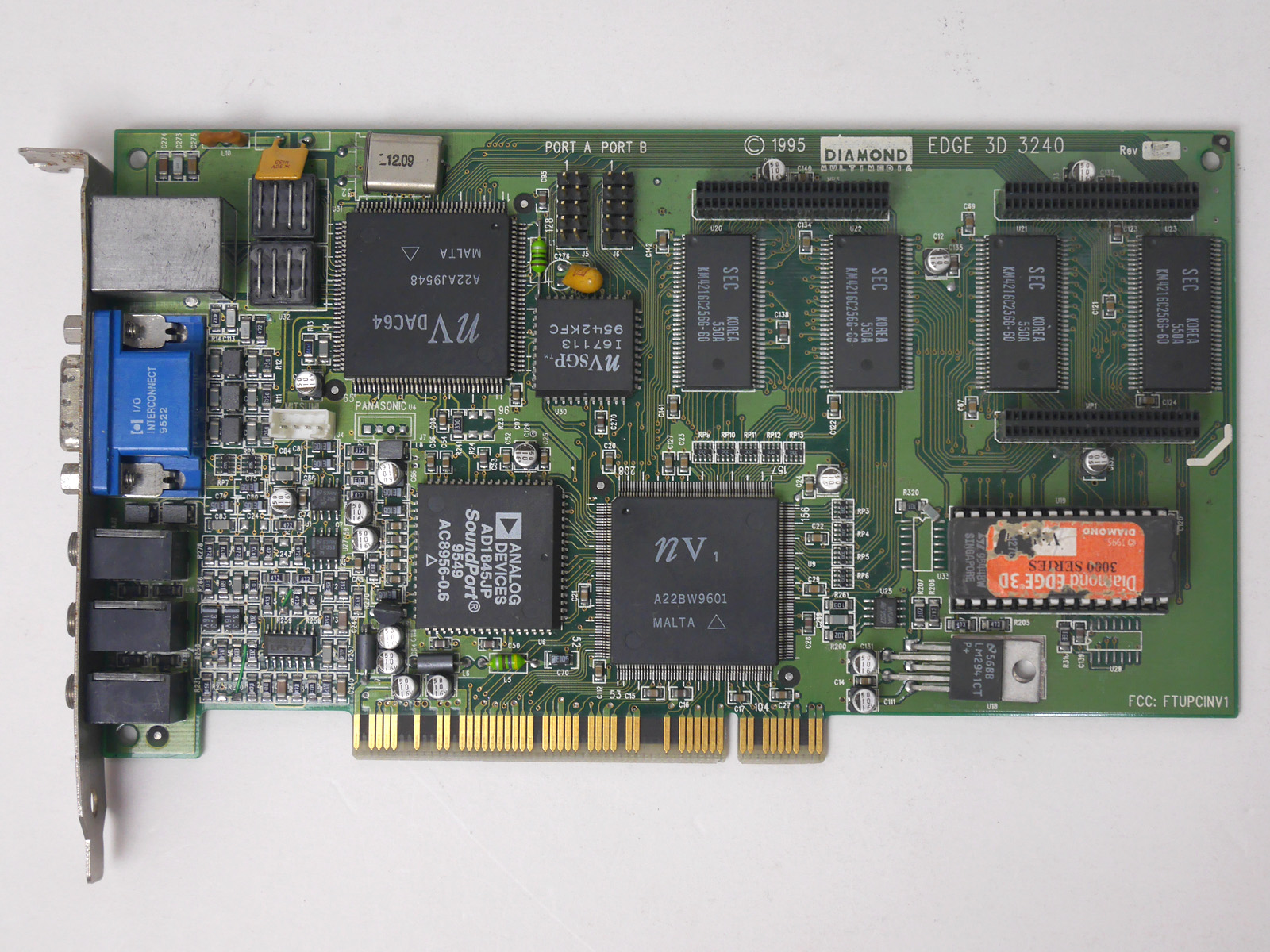
No one yet ruled that market. Graphics interfaces, rendering methods, and hardware form factors were all in motion, and the price of a wrong direction was high. The NV1, launched in 1995, took a technical route different from the triangle rendering that later became mainstream, and tried to integrate audio and other multimedia functions. Its technical distinctiveness never won broad developer support. The NV2 project aimed at Sega's console could not proceed either, and the company fell into a survival crisis.[2][31]
Looking back years later in his NTU commencement speech, Huang recalled that NVIDIA finally admitted the original route was wrong, explained the situation to Sega, asked to exit the project, and received help. What stands out in that participant's recollection is his willingness to face a mistake that had already happened.[2]
For a small company, technology invested over several years often carries the founder's judgment of himself. Giving it up means more than swapping a product plan: it means re-explaining all the earlier investment, winning back customers' goodwill, and reserving scarce money for the next attempt. The choice Huang made in this crisis solved, first of all, whether the company would live.
In 1997, the RIVA 128 turned to the mainstream PC graphics route, integrating 2D and 3D capability to win back the system and board markets. According to NVIDIA's own history, the product sold about one million units in its first four months.[1]
I saw the RIVA 128, but at the time there was no way to know what trade-offs sat behind a graphics card. Seen years later, its significance goes beyond performance. This was where NVIDIA first proved it could fit a chip into the mainstream software and hardware system—make it usable for customers and sellable for partners. That was the first lesson before it learned to run a platform.
2. GeForce Turns Technical Leadership into a Durable Business
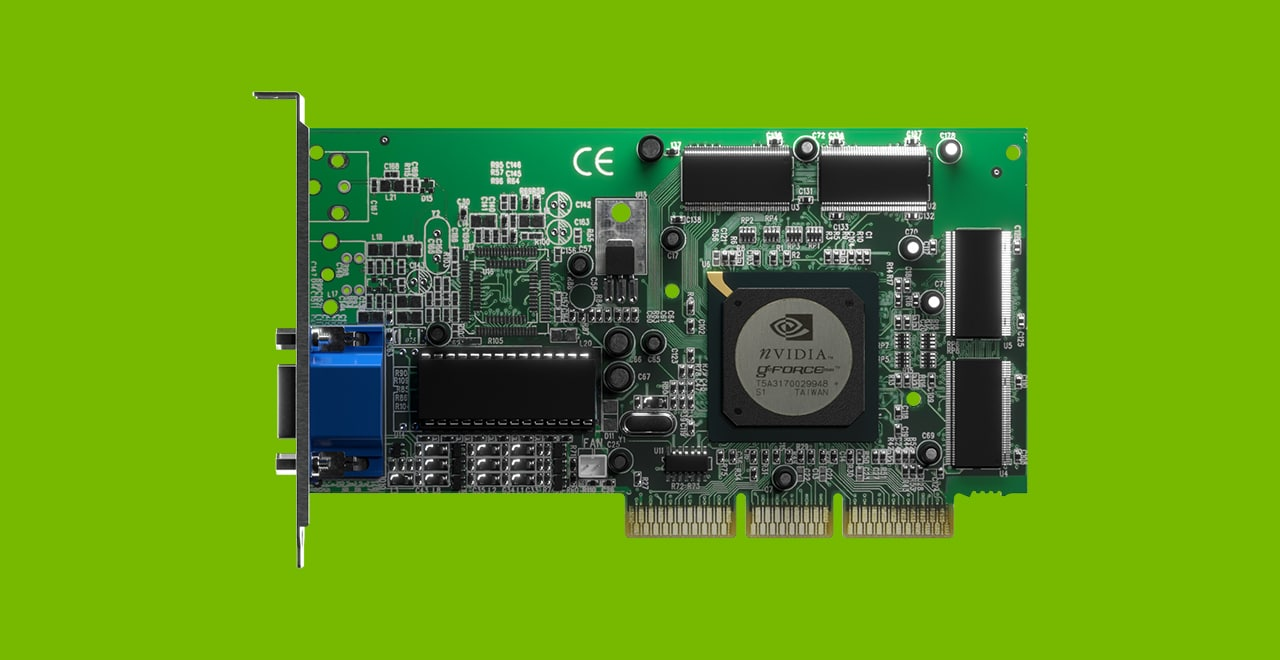
In 1999, the GeForce 256 integrated hardware transform, lighting, and further graphics functions, and NVIDIA built a product identity around the GPU. The Quadro, launched the same year, entered professional workstations, carrying graphics capability into design, film, and other professional software.[1][4]
For players, generation after generation meant higher frame rates and more complex scenes; for NVIDIA, it began bringing the same underlying technology to customers with different requirements. Gamers weigh price and experience; professionals also care about software certification, stability, and long-term support. The work beyond the chip gradually became part of the product's value.
Recalling that era should leave room for the others. Doom built its sense of space differently from the polygonal 3D games that followed; Quake, GLQuake, and the 3dfx Voodoo were an important stretch in the evolution of early 3D graphics and hardware acceleration. NVIDIA's success happened inside that jointly driven change.[1]
I remember the OpenGL-versus-Direct3D arguments. At the user's desk, an interface war turned into very concrete experience: which modes a game supported, whether the drivers were stable, whether the card in your hand could render the full effect. Chip specifications were only part of it; when software and content lagged, hardware leadership was hard to feel.
3dfx once had enormous brand appeal, but product delays, channel struggles, and financial pressure wore it down. In 2001, NVIDIA completed the purchase of parts of its graphics assets, gaining patents, trademarks, and more. The Voodoo that had thrilled so many players faded from the mainstream graphics market.[3]
What this competition left with me is that leadership has to be maintained product generation after product generation. NVIDIA's accumulating advantages included chip iteration, driver support, developer cooperation, and board partners working in concert. The company under Huang organized that work into a system that could keep shipping products.
At the same time, GPU programmability kept growing. The 2001 GeForce3 was an important node. Developers could control more of the graphics pipeline, and the chip gained room to take on richer computing work. Those designs served graphics first, and later opened the conditions for general-purpose computing.[4]
3. Xbox and nForce Expose the Platform Boundary
With graphics established, NVIDIA tried to move up into more of the platform. The original Xbox was a major order. The company supplied the graphics and media-communications chips for Microsoft, and Microsoft accounted for about 23% of NVIDIA's FY2003 revenue. The two sides also clashed over pricing, went through arbitration, and settled in 2003.[5]
A customer of that size brings scale quickly—and just as clearly shapes the supplier's business. What specs the next console uses, and which chip vendor it picks, remain the customer's decisions. Winning one generation's order and holding the platform's long-term direction are two different things.
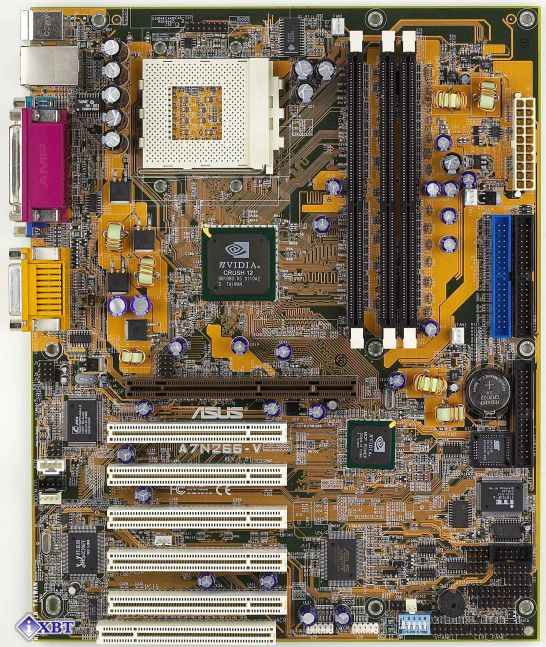
nForce took NVIDIA deeper into the PC. Starting from the AMD platform in 2001, it later entered the Intel platform through licensing. NVIDIA provided chipsets, drivers, and reference designs; motherboard makers turned them into products for users.[1][5]
I used an nForce motherboard, and the direct impression it left was better disk I/O. That was one machine's experience, mine. Because of it, my picture of NVIDIA stopped at the graphics card: it had begun to shape how a whole computer connected, responded, and felt.
The chipset sits between CPU, memory, graphics, storage, and network—an attractive position. The 2006 ULi acquisition added core-logic technology and customer-engineering strength in Taiwan and China. The company was serious about this direction.[6]
By FY2010, the MCP chipset business still had revenue of about $872 million, roughly a quarter of the company's total, including nForce, ION, and related products.[7]
The problem was the next platform. As functions like the memory controller moved into the CPU, the space for traditional chipsets shrank; the interconnect Intel used on new processors also triggered a dispute over license scope. NVIDIA's FY2010 annual report states plainly that with the dispute unresolved it would not develop the corresponding DMI chipsets and was redirecting R&D elsewhere. In early calendar 2010 the company stopped future MCP development, and the remaining business wound down.[7]
In 2011 the two sides reached a new cross-license and settlement, under which Intel agreed to pay $1.5 billion in installments. But the agreement did not restore NVIDIA's right to build chipsets for the new generation of Intel CPUs, and it granted no x86 CPU license.[8]
This episode is a good lens on how hard it is to exit. The chipset business still had revenue; engineering capability and customer relationships had accumulated. What changed were the conditions for building the next generation. Revenue scale cannot substitute for a judgment about future position.
NVIDIA stopped developing the next MCP and moved the resources elsewhere. By then CUDA was already out, and the company was building its own computing platform. The two lines had run in parallel: one constrained by a CPU vendor's interfaces and licenses, the other starting to build a more direct relationship with developers through software tools.
4. Why CUDA Was Worth the Long Investment
While the chipset business expanded, another kind of user was starting to look at the GPU differently. Scientists found that many computations also need to process huge numbers of similar tasks at once. The GPU's parallel capability fit—but doing that work through the graphics interface was painfully inconvenient.
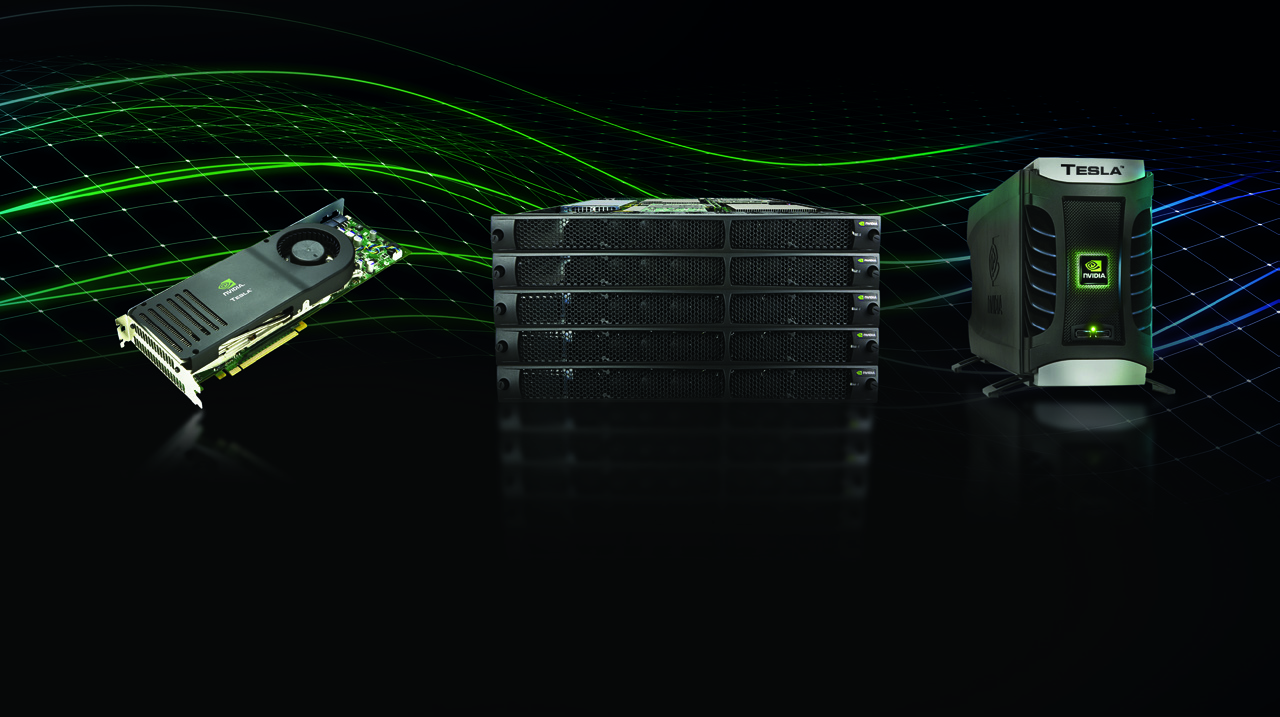
Ian Buck's Brook research at Stanford was an important predecessor of this route. Buck brought the work into NVIDIA in 2004. In 2006 the company published the CUDA architecture; in 2007 it gave developers tools and launched the Tesla computing line. The GPU gradually acquired a clear general-purpose identity.[1][9]
What CUDA changed was the developer's relationship with the chip. Before, people used the GPU mainly through the graphics interface; with programming tools, a runtime, and compute libraries, they could organize programs around their own computational problems. The performance advantage gained an entry that was easier to use.
Sustaining this required hardware to move too. The Fermi architecture, announced in 2009, strengthened double precision, caching, and ECC, taking the requirements of research and computing centers more seriously. Some of that investment never showed up in game frame rates, but it concerned numerical accuracy, reliability, and whether programs ran steadily.[10]
In later recollections, Huang singled out the 2007 decision to carry CUDA across the broad GPU lineup, and the pressure of sustaining it. The choice let many more developers touch the same computing environment—and required the company to maintain software and tools for years.[2]
To me, this is the passage with the most weight in judging Huang's eye for positioning. General-purpose GPU computing had real demand then, but nothing like today's market. He backed the company in steadily building a broader platform on top of its existing strengths. Researchers used it first; new applications grew gradually; the value of the investment was verified by that use.
CUDA found its users in scientific computing first, and Tesla slowly became a product line with a market. Deep learning then widened what the capability was for, and changed its weight inside the company. By FY2016, NVIDIA's full-year revenue was about $5.01 billion—still far from what generative AI later brought.[29]
The 2008 AGEIA acquisition also belongs in this context of widening the GPU's uses. PhysX brought physics simulation into NVIDIA's toolchain, and the computation later ran on the GPU. For players, what mattered was whether debris, cloth, and smoke moved more naturally; for the company, it was expanding what the hardware could do and what developers could use.[11]
These uses did not add up, at the time, to a written AI plan. They gradually widened the GPU's range, and gave NVIDIA contact with more kinds of problems.
5. The Phone Market: In, Then Out
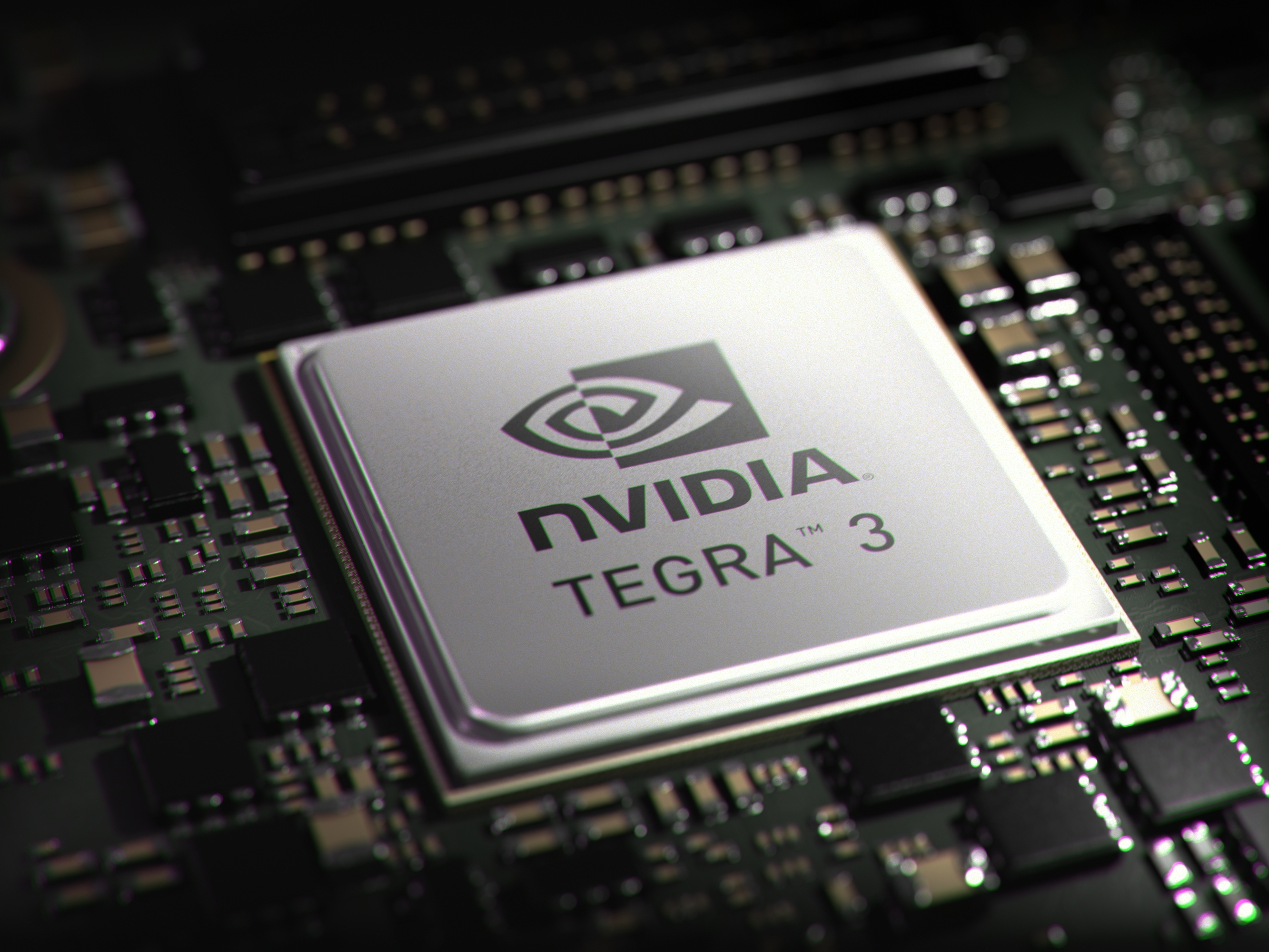
CUDA's long investment did not mean NVIDIA's reading of new markets was always right. As smartphones grew quickly, the company wanted in. Tegra integrated CPU, GPU, and multimedia on one system-on-chip, trying to carry its graphics advantage onto mobile devices.
In 2011, NVIDIA announced the acquisition of Icera for about $367 million to add baseband and RF capability. Huang explicitly called it a major step in expanding the mobile business. Icera was not a lab curiosity either: its modem products had been approved by more than 50 carriers worldwide.[12]
As a product combination, the decision made sense. An application processor plus a baseband could offer phone makers a more complete solution. But the phone market weighs power draw, connectivity, cost, certification, supply, and time-to-market all at once. Graphics performance is one item among many, and the technology and certifications the acquisition added did not automatically become a defensible customer position or competitive scale.
In 2015, NVIDIA announced it would exit its own phone modem business and concentrate resources further on gaming, automotive, and cloud computing. The earlier SoC, graphics, and software accumulation continued in gaming devices, embedded, and automotive products.[12]
This episode has to be judged with entry and exit together. The original investment fell short of expectations, and Huang should answer for that judgment; the willingness to stop also shows how he decides. Admitting that the market had not turned the advantage into a sustainable position was what allowed resources to be rearranged.
Put the phone business next to CUDA and the question sharpens. Both needed patience, but on different grounds. CUDA's tools, applications, and developer base kept widening what the GPU could do; the phone business kept demanding that the company fill in more conditions, where its graphics advantage alone could not decide the outcome. That contrast is how I read the two choices.
6. The Serial Escalation After AlexNet
In 2012, AlexNet's breakthrough in the ImageNet competition gave a vivid demonstration of deep learning paired with GPUs. The paper records that the team trained the network on two 3GB GTX 580 cards in roughly five to six days.[13]
For anyone who knew graphics cards, that detail is concrete. The GTX 580 was a card players recognized and could buy—and it was already being used for another kind of work. In hindsight, the hardware we understood through frame rates was starting to change how long experiments took in researchers' hands.
The breakthrough belonged to Alex Krizhevsky, Ilya Sutskever, and Geoffrey Hinton, and to the prior accumulation in algorithms, data, and computation. NVIDIA then increased its deep-learning investment, and the product adjustments gradually reached software, systems, and silicon.
cuDNN, introduced in 2014, turned the operations neural networks use most into an optimized base library. Researchers and framework developers could use it instead of each team optimizing from the primitives up.[15]
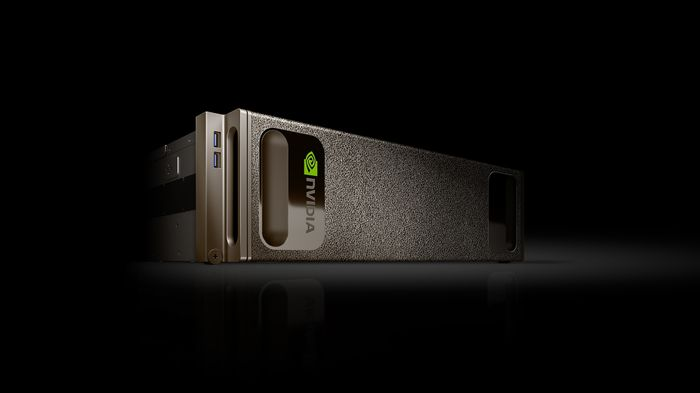
The 2016 DGX-1 combined eight P100 GPUs, HBM2 memory, NVLink interconnect, and companion software into a system. What customers bought included hardware, a software environment, updates, and support; some of the integration work in multi-GPU computing now sat with NVIDIA.[16]
In 2017, the Volta V100 added Tensor Cores, giving matrix computation dedicated hardware execution. Deep learning's demands had entered the chip architecture itself.[17]
These moves landed on software, systems, and silicon respectively, with a clear relation among them. Algorithms needed to run faster; developers needed the hardware to be usable; customers needed whole systems in production sooner. NVIDIA invested across these questions in sequence, and the company's center of gravity moved with them.
In a 2016 bylined article, Huang had already described deep learning as a software pattern requiring a new computing platform, emphasizing performance, programmability, and availability. That contemporaneous statement is more persuasive than any later "saw it all coming": he had made the judgment publicly, and the product investment was following.[14]
His most important role here, in my view, was turning a signal from the research community into a direction the whole company executed. Software teams optimized operators; chip teams adjusted architectures; system teams took on integration; customer support had to keep up. A founder's judgment becomes a product customers can buy and use only through that organizational process.
7. RTX and the Reminder of Demand Cycles
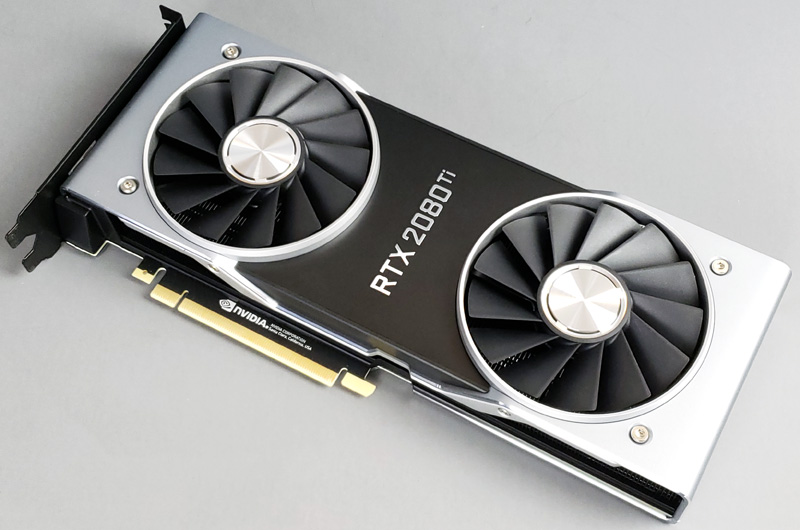
NVIDIA's shift toward computing did not end the gaming line. In 2018, Turing and RTX combined traditional shading with RT Cores and Tensor Cores, advancing real-time ray tracing and bringing AI graphics technologies like DLSS into games. Capabilities developed for computing came back to improve the graphics experience.[18]
My own graphics-card history runs on to the RTX 3090. Graphics had reached another stage by then: 3D space was the baseline, and progress showed up more as lighting, reflections, materials, and shadows. For players, those effects still have to be weighed against frame rate, latency, and price.
A technical route ultimately faces that test. Whether more complex effects get widely used depends on hardware performance—and on content support and what users will pay.
The strain of early 2019 shows the process is not smooth. Channel inventory after the mining wave was still being digested, some high-end Turing products sold below expectations, and the macro environment and data-center customers' purchasing also weighed. NVIDIA cut its outlook that January, and FY2020 full-year revenue subsequently fell back to about $10.92 billion.[19]
This should stay in the retrospective. A valuable long-term direction does not guarantee that every quarter's demand judgment is right. Cards bought for gaming, research, or other work can also be pushed up by speculative demand; the company still has to tell what will last from what is temporary.
Huang's capability is better judged in that reality. He could hold an important direction, and he also lived through gaps between product acceptance and demand forecasts. Strategy and operations both keep answering to the market.
8. Mellanox Moves the Boundary of Computing Past the Server
When model training needs many GPUs working together, a new constraint appears. A single chip can be fast, but data has to move between chips and servers. When communication can't keep up, more GPUs spend much of their time waiting, and the compute never gets used.
NVIDIA had already improved GPU-to-GPU interconnect with NVLink, and had worked with Mellanox for years. The 2019 acquisition announcement meant it was ready to bring network capability—which had required cross-company coordination—into a shared product and R&D line. The deal closed in 2020 with an announced value of about $7 billion.[20]
From today's AI clusters, the acquisition's meaning is easy to see. What deserves attention is Huang's judgment at the time. On the 2019 deal call he was already saying that large numbers of compute nodes need to work as a networked whole, that the data center would become one computing unit, and that the network would participate in computing more deeply.[20]
That shows how concrete his judgment was. As compute scaled, he believed NVIDIA needed to hold the network capability more directly, bringing compute and communication into one R&D and product arrangement. In a later letter to employees, Huang recalled that during the bidding he committed to being the final, highest bidder—a clear statement of how much the deal mattered to him.[20]
Mellanox brought InfiniBand, Ethernet, NICs, switching technology, and teams, letting NVIDIA co-design compute and communication more deeply. The acquisition sped that up, and required the company to carry integration, capital, and regulatory risk. Its value should be read in how those capabilities later entered products.
In 2020, Cumulus joined NVIDIA's networking business, adding the network operating system, analytics, and automation software. As compute scaled, the network had to be not only fast but deployable, configurable, and manageable. That deal continued the same direction.[21]
Mellanox, to me, is one of the most consequential decisions in NVIDIA's history. It shows the company had begun to scope investment by the customer's whole computing job. When the constraint sits outside the GPU, NVIDIA is willing to enter that territory and let its products carry more responsibility.
9. The Arm Deal That Didn't Close—and the CPU Line That Continued
While adding network capability, NVIDIA also tried to expand its position in the CPU ecosystem. In 2020 it announced the proposed $40 billion acquisition of Arm, pledging to keep its open licensing model and customer neutrality.[22]
This attempt was more complicated than Mellanox. Arm serves a great many chip designers, including NVIDIA's own partners and competitors. Under a company that competes in chips directly, other customers would worry about technology direction, information protection, and fair treatment. Whatever the technical synergy, it had to face industry relationships and regulatory requirements.
In 2022, the deal terminated over significant regulatory challenges. SoftBank kept the $1.25 billion prepayment; NVIDIA kept a 20-year Arm license. An expansion that didn't complete, and a price that was paid.[22]
The CPU product line did not stop. Grace had already been unveiled in 2021, before the Arm deal ended. NVIDIA could use its licensed Arm technology to design data-center CPUs, letting CPU, memory, and GPU work more closely together.[23]
Separating the two is what makes an accurate judgment possible. Building the CPU you need and owning the architecture licensor are choices at different levels. The first path continued; the second deal failed. One result should not be used to cover the other.
This stage also shows the boundary of Huang's way of expanding. Judgment about technology and willingness to spend capital do not guarantee a deal closes. The deeper a company moves into the industry's foundation layer, the more it must handle other participants' concerns about their interests and independence.
10. Blackwell Pushes the Product into the Rack
When generative-AI demand surged, NVIDIA already held GPUs, development tools, deep-learning libraries, multi-GPU systems, and networking. The Hopper H100, announced in 2022, had already built Transformer Engine and related capabilities into the architecture. When customers' demand amplified, these accumulations could act together.[24]
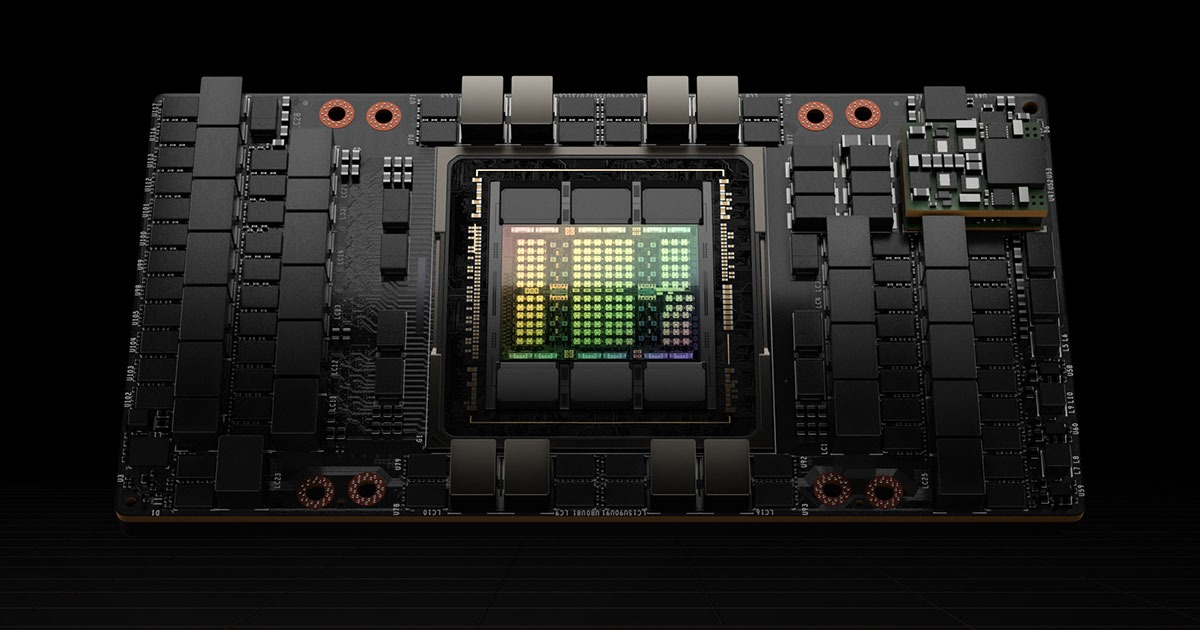
The revenue change shows the scale of the shift. NVIDIA's revenue was about $26.97 billion in FY2023, $60.92 billion in FY2024, $130.50 billion in FY2025, and $215.94 billion in FY2026. In FY2026, data-center revenue approached nine-tenths of the total; the company's center of business had visibly changed.[29]
Blackwell and GB200 NVL72 pushed the design scope another step. Seventy-two Blackwell GPUs, thirty-six Grace CPUs, NVLink interconnect, and liquid cooling went into one rack-scale system. The unit the customer faces grew from a card, to a server, to the whole rack.[25]
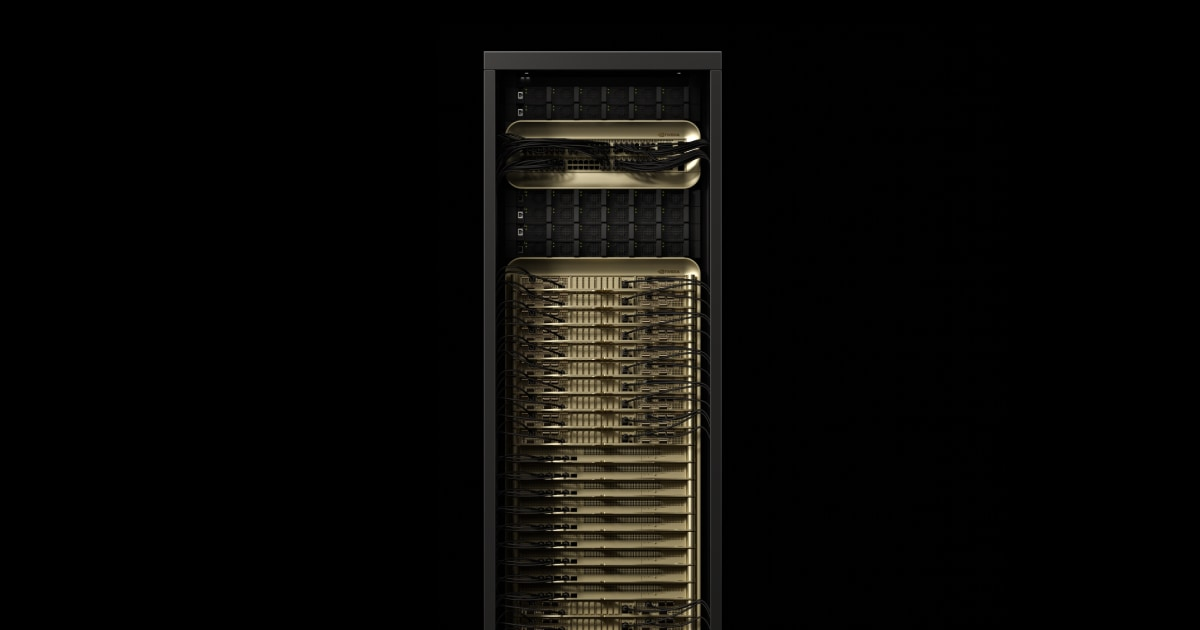
There are practical reasons behind this. As models and parallel scale grow, compute, memory, communication, power, and cooling interact. Optimizing one component alone is less and less able to raise the efficiency of the whole job. Designing more of it together is what creates room to handle those constraints.
The costs are just as direct. With a bigger product surface, validation, supply chain, installation, and maintenance all get more complex. NVIDIA has to work with server makers, facility partners, and cloud customers—and overlaps more deeply with some of them. A rack-scale product asks the company to carry system responsibility matching its influence.
The Vera Rubin platform announced in 2026 continues in this direction, placing CPU, GPU, interconnect, network, and other infrastructure components into a more complete system design. For products like these, I would rather watch the tasks customers actually run: how long training takes, how many requests inference serves at a given latency, how the system recovers from failure, and what all of that costs.[26]
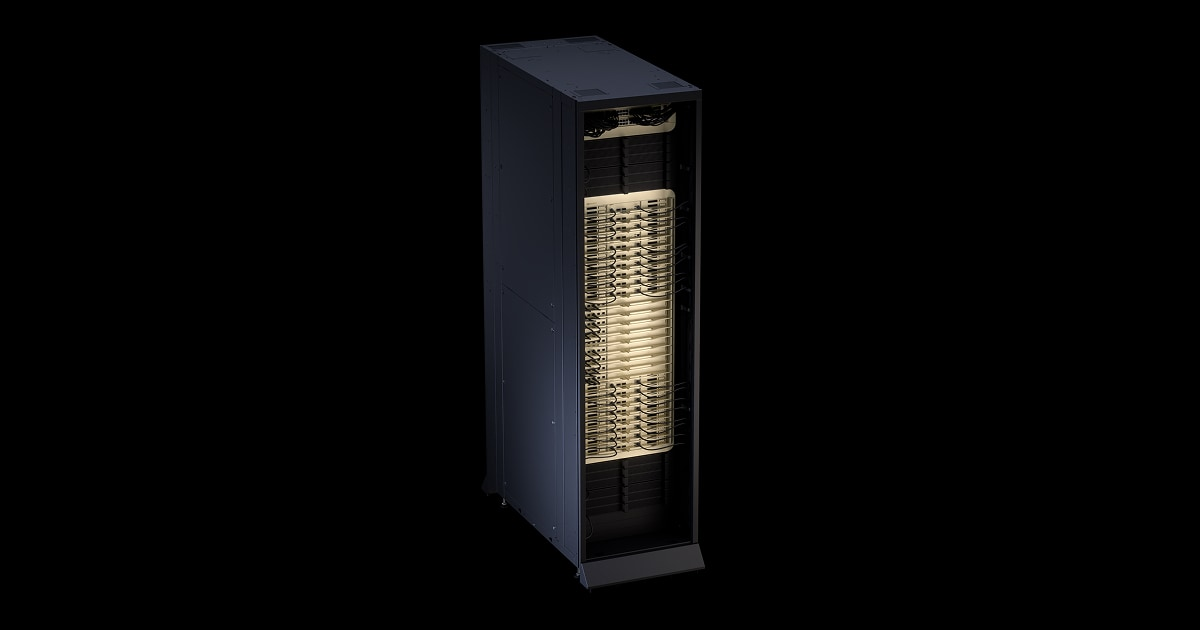
The Run:ai acquisition extends the focus to how resources are used. NVIDIA announced the deal in 2024 and completed it at year's end. What it added was GPU workload management and orchestration—helping customers allocate and schedule the compute they already have.[27]
By this stage, NVIDIA's platform spans several interlocking layers. CUDA lets developers use the compute; libraries keep models running; interconnect and networking let many chips cooperate; system products take on integration; scheduling software participates in allocating resources. Customers' programs, operations experience, and validation records accumulate alongside. Changing platforms means re-adapting and re-validating, so performance, price, and migration cost get compared together.
That position has not frozen industry relationships. In 2025, NVIDIA and Intel announced joint development of data-center and PC products, with NVIDIA investing $5 billion in Intel. From the chipset-era disputes to the new cooperation, the two companies' relationship has moved with product goals and each side's capabilities.[28]
Having watched these changes, NVIDIA's platform expansion should not be summarized as "escape from everyone else and control everything." The company did strengthen its grip on key technologies, and it has always needed others' manufacturing, products, channels, and customers. Its position comes from continuously deciding which parts to carry itself, and which to complete with partners.
Conclusion: The Transition Path and Jensen Huang's Judgment
Looking back over NVIDIA's thirty-plus years, my assessment of Jensen Huang falls on the transition path, the eye for positioning, and the way he decided. Each is visible in concrete events, and each carries its own costs and limits.
First, the transition path. NVIDIA moved from graphics chips to AI infrastructure with considerable continuity of capability. Graphics processing accumulated parallel computing; the programmable GPU and CUDA widened its uses; deep learning then drove compute libraries, dedicated units, and system products. When many chips had to work together, interconnect, networking, and scheduling entered the product range.
The path's character is that new businesses kept using earlier accumulations of technology, software, and customer relationships. The main revenue changed enormously, while the underlying capabilities extended and widened. The failures of nForce and phones also make it clear: expanding along technically adjacent directions does not guarantee commercial success. The path NVIDIA walked out is made of choices and of corrections.
Next, the eye for positioning. CUDA best shows his willingness to build capability before the market matured; the serial escalation after AlexNet shows he could raise the commitment when new evidence arrived; Mellanox shows another layer: when the customer's problem reached beyond the GPU, he was willing to bring networking into the company's scope ahead of the need.
What these choices share is that R&D was arranged years before demand paid off at scale. Computing platforms, software ecosystems, and systems capability take years to build; a budget increase at the last minute cannot fill the gap. Huang gave those directions time, and as the opportunity clarified, concentrated the company around them.[2][14][20]
Finally, decisiveness. The NV1 and the console project that followed required admitting a wrong route; MCP required putting down a business that still earned; the phone modem required accepting that the original market judgment had missed; CUDA required bearing short-term pressure and continuing to invest. The Mellanox bidding showed the resolve to make a large capital commitment for a key capability.
What I weigh most is the differences among these choices. Persistence needs grounds, and so does timely exit. At several key nodes, Huang could turn a judgment about technical direction into resource allocation, product arrangements, and business choices. Decisiveness has specific content here: the company actually changed what it was doing, and accepted the consequences.
An assessment like this should also leave room for teams and circumstances. CUDA, the GPU architectures, and the networking and systems capability were built by many researchers and engineers, and developers, customers, and partners kept finding new uses for them. Huang's essential contribution was choosing directions, concentrating resources, and keeping the company willing to work on opportunities not yet fully realized.
On November 12, 2026, NVIDIA announced that Jensen Huang had resigned as president, CEO, and director, with Colette Kress becoming interim CEO. SEC filings show the board accepted the resignation the day before. The change opens a new stage for the company and makes a long-standing question concrete: how much of an investment approach that leaned on the founder's judgment can remain in the organization.[30]
As a user who has watched from the RIVA 128 era to the RTX 3090, what stays with me most from this history is how familiar products were used, again and again, to solve new problems. Huang misjudged at times, and he also made several decisions that changed the company's direction. He could keep technology funded before its market formed, and he could end businesses that had consumed years without achieving an edge. NVIDIA's position today is closely bound up with those choices and that execution. Whether the new management can keep making clear judgments and driving the company to act on them is what the next chapter of this history is worth watching.
Appendix I: Acquisitions Related to the Main Line
The table lists the eight transactions directly tied to this article's thread. Capability and effect are summaries of public material; a completed deal does not mean every integration goal was realized.
| Deal | Time and status | Capability gained or sought | Outcome |
|---|---|---|---|
| 3dfx partial graphics assets | Signed 2000, completed 2001 | Graphics patents, trademarks, and other assets | Consolidated the graphics business; not a purchase of the whole company [3] |
| ULi | Completed 2006 | Core-logic technology and customer engineering | Strengthened chipsets; still bounded by platform licensing and integration trends [6][7] |
| AGEIA | Completed 2008 | PhysX physics-simulation software and technology | Widened GPU uses and developer tools [11] |
| Icera | Announced 2011, completed | Baseband and RF capability | Added modem technology; exited phone baseband in 2015 [12] |
| Mellanox | Announced 2019, completed 2020 | InfiniBand, Ethernet, NICs, switching, and teams | Co-design of compute and communication; the foundation for rack-scale products [20] |
| Cumulus | Joined 2020 | Network OS, analytics, and automation | Completed the network software layer [21] |
| Arm | Announced 2020, terminated 2022 | Broader CPU IP and ecosystem position | Terminated on regulatory challenges; 20-year license retained [22] |
| Run:ai | Completed 2024 | GPU workload management and orchestration | From supplying compute to helping customers use it [27] |
Appendix II: Representative Revenue Waypoints
Revenue is stated in NVIDIA fiscal years, in units of 100 million USD. A fiscal year typically ends in late January of the labeled year, so it cannot be read as the same calendar year's revenue, nor should any year's growth be attributed entirely to products launched that year.
| FY | Revenue ($100M) | Context for the waypoint |
|---|---|---|
| FY2010 | 33.26 | MCP chipsets still about a quarter of revenue [7] |
| FY2016 | 50.10 | Research computing and deep learning growing [29] |
| FY2020 | 109.18 | A down year after channel and demand adjustment [19] |
| FY2021 | 166.75 | Gaming and data-center growth; Mellanox consolidated [19] |
| FY2023 | 269.74 | Before generative-AI demand paid off at scale [29] |
| FY2024 | 609.22 | Data-center business expanding fast [29] |
| FY2025 | 1304.97 | Data center keeps driving growth [29] |
| FY2026 | 2159.38 | Data-center revenue approaching nine-tenths [29] |
FY2026 ended January 25, 2026. The figures above show the change in business scale; they do not by themselves prove any single decision's financial return. Research is current through November 13, 2026.
Sources
[1] NVIDIA official corporate timeline; id Software's original GLQuake and Voodoo driver notes. The former for the product timeline, the latter for early hardware-acceleration background.
https://www.nvidia.com/es-es/about-nvidia/corporate-timeline/
https://github.com/id-Software/Quake/blob/master/WinQuake/3dfx.txt
[2] NVIDIA's official write-up of Jensen Huang's 2023 NTU commencement speech; a participant's recollection years later.
https://blogs.nvidia.com/blog/huang-ntu-commencement/
[3] NVIDIA's announcement of the completed purchase of portions of 3dfx's graphics assets; 3dfx's 2001 annual report.
https://www.sec.gov/Archives/edgar/data/1045810/000101287001500581/dex991.txt
https://www.sec.gov/Archives/edgar/data/1010026/000089161801500803/f72487e10-k.txt
[4] NVIDIA's official GeForce 256 retrospective; NVIDIA's 2001 paper on the user-programmable vertex engine.
https://blogs.nvidia.com/blog/first-gpu-gaming-ai/
https://research.nvidia.com/publication/2001-08_user-programmable-vertex-engine
[5] NVIDIA FY2005 annual report, containing the Xbox revenue, arbitration, and Intel licensing records.
https://www.sec.gov/Archives/edgar/data/1045810/000104581005000008/annualreport.htm
[6] NVIDIA's announcement of the completed ULi acquisition, February 21, 2006.
https://www.sec.gov/Archives/edgar/data/1045810/000104581006000007/ulipressrelease.htm
[7] NVIDIA FY2010 and FY2012 annual reports, covering MCP revenue, the licensing dispute, and the halt to future development.
https://www.sec.gov/Archives/edgar/data/1045810/000104581010000006/fy2010form10k.htm
https://www.sec.gov/Archives/edgar/data/1045810/000104581012000013/nvda-2012x10k.htm
[8] The 2011 Intel–NVIDIA cross-license agreement.
https://www.sec.gov/Archives/edgar/data/1045810/000119312511005134/dex101.htm
[9] CUDA programming guide introduction; CUDA toolkit archive; NVIDIA's official technical retrospective on Ian Buck and Brook.
https://docs.nvidia.com/cuda/cuda-programming-guide/01-introduction/introduction.html
https://developer.nvidia.com/cuda-toolkit-archive/
https://developer.nvidia.com/blog/inside-the-programming-evolution-of-gpu-computing/
[10] NVIDIA's official Fermi architecture overview, 2009.
https://www.nvidia.com/content/GTC/documents/SC09_Fermi_Overview.pdf
[11] NVIDIA FY2009 annual report: the AGEIA acquisition and PhysX records.
https://www.sec.gov/Archives/edgar/data/1045810/000104581009000013/fy2009form10k.htm
[12] NVIDIA's 2011 Icera acquisition announcement; 2015 announcement of the modem wind-down.
https://nvidianews.nvidia.com/news/nvidia-to-acquire-baseband-and-rf-technology-leader-icera
https://nvidianews.nvidia.com/news/nvidia-to-wind-down-icera-modem-operations-6622489
[13] Krizhevsky, Sutskever, and Hinton, 2012: "ImageNet Classification with Deep Convolutional Neural Networks."
[14] Jensen Huang, bylined: "Accelerating AI with GPUs: A New Computing Model," January 12, 2016.
https://blogs.nvidia.com/blog/accelerating-ai-artificial-intelligence-gpus/
[15] NVIDIA cuDNN launch technical blog, September 7, 2014.
https://developer.nvidia.com/blog/accelerate-machine-learning-cudnn-deep-neural-network-library/
[16] NVIDIA DGX-1 launch announcement, April 5, 2016.
https://nvidianews.nvidia.com/news/nvidia-launches-world-s-first-deep-learning-supercomputer-6622436
[17] NVIDIA Volta launch announcement, May 10, 2017.
[18] NVIDIA Turing architecture in depth, September 14, 2018.
https://developer.nvidia.com/blog/nvidia-turing-architecture-in-depth/
[19] NVIDIA's January 2019 guidance revision; the FY2021 report and its FY2020 comparative.
https://www.sec.gov/Archives/edgar/data/1045810/000104581019000004/pressrelease.htm
[20] The 2019 Mellanox deal call (SEC exhibit); the 2020 completion announcement; Huang's letter to employees.
https://www.sec.gov/Archives/edgar/data/1045810/000104581019000031/ex993investorconferencecal.htm
https://blogs.nvidia.com/blog/building-the-new-nvidia-together/
[21] NVIDIA: Cumulus joins the networking business, June 16, 2020.
https://blogs.nvidia.com/blog/cumulus-programming-networks/
[22] NVIDIA's 2020 proposed Arm acquisition announcement; the 2022 termination announcement.
[23] NVIDIA Grace CPU announcement, April 12, 2021.
[24] NVIDIA Hopper architecture announcement, March 22, 2022.
[25] NVIDIA GB200 NVL72 official product page.
https://www.nvidia.com/en-us/data-center/gb200-nvl72/
[26] NVIDIA Vera Rubin platform announcement, March 16, 2026.
https://nvidianews.nvidia.com/news/nvidia-vera-rubin-platform
[27] NVIDIA's Run:ai acquisition announcement; investor TLV Partners confirming completion, December 30, 2024.
https://blogs.nvidia.com/blog/runai/
https://www.tlv.partners/runai-and-nvidia/
[28] NVIDIA–Intel cooperation and investment announcement, September 18, 2025.
[29] NVIDIA FY2016, FY2024, FY2025, FY2026 financial reports.
[30] NVIDIA's November 12, 2026 CEO transition announcement and the corresponding SEC Form 8-K. The SEC filing records the board's acceptance of the resignation on November 11.
https://nvidianews.nvidia.com/news/nvidia-announces-ceo-transition/
https://www.sec.gov/Archives/edgar/data/1045810/000104581026000082/nvda-20261111.htm
[31] NVIDIA early annual reports: the halt of NV1 sales, cancellation of NV2 development, and RIVA 128 shipments.
https://d18rn0p25nwr6d.cloudfront.net/CIK-0001045810/fe51b294-a8b0-4c7d-8388-43dedbc5d29a.pdf
Images identify real products of each era; copyright remains with the owners. Captions keep the source page; for external commercial publication, image licenses should be separately verified.